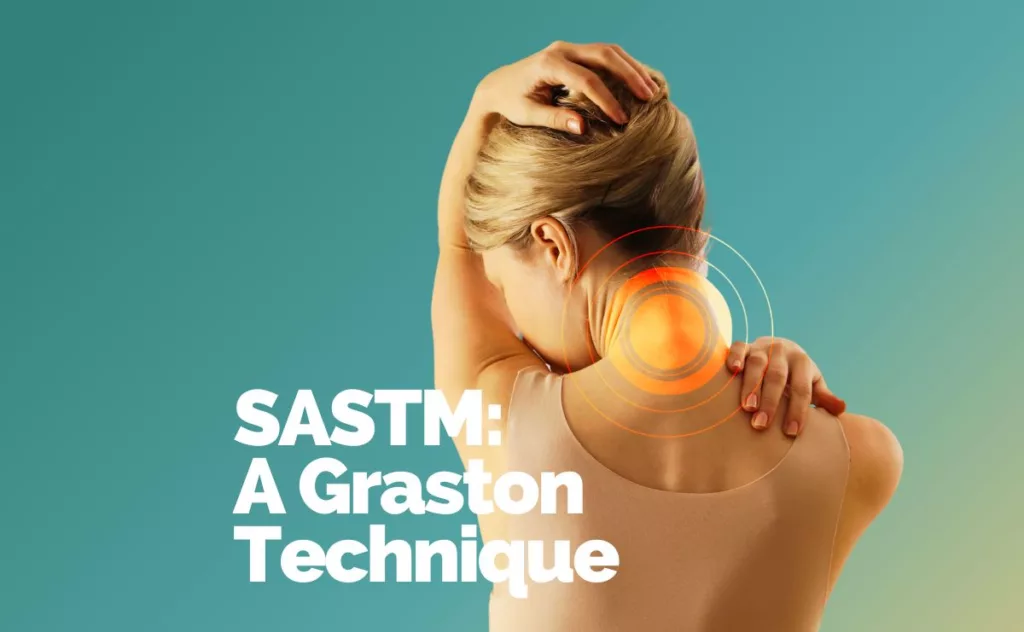
Instrument-assisted soft tissue mobilization uses smooth handheld tools to apply controlled pressure to muscles, tendons, and other soft tissues. SASTM is a general description; Graston Technique is a branded training and instrument system.
What treatment may involve
A clinician first evaluates the painful area, movement, strength, recent activity, and relevant health history. When appropriate, an instrument is moved over the skin with pressure selected for the patient and the treatment goal. It may be combined with mobility work, progressive exercise, and activity guidance.
The technique is sometimes described as “breaking up scar tissue,” but that phrase overstates what can be concluded from current evidence. A more accurate goal is to use manual input as one part of a plan to improve comfort and function. Research is mixed and varies by condition, so benefits cannot be guaranteed.
Possible effects and safety
Temporary tenderness, redness, or mild bruising can occur. Treatment may need to be avoided or modified over open wounds, active infection, a recent fracture, significant skin disease, impaired sensation, bleeding disorders, or when a person uses anticoagulant medication. Tell the clinician about relevant medical conditions, recent surgery, pregnancy, and medications before treatment.
When another evaluation is needed
Sudden severe pain, a pop with loss of function, marked weakness, rapidly increasing swelling, fever, unexplained weight loss, or progressive numbness should be evaluated promptly. Imaging or referral may be appropriate depending on the findings.
Schedule in San Francisco
Learn more about chiropractic care in San Francisco, or view current chiropractic appointments in Jane. The clinician can determine whether instrument-assisted soft tissue work is appropriate and available for your needs.